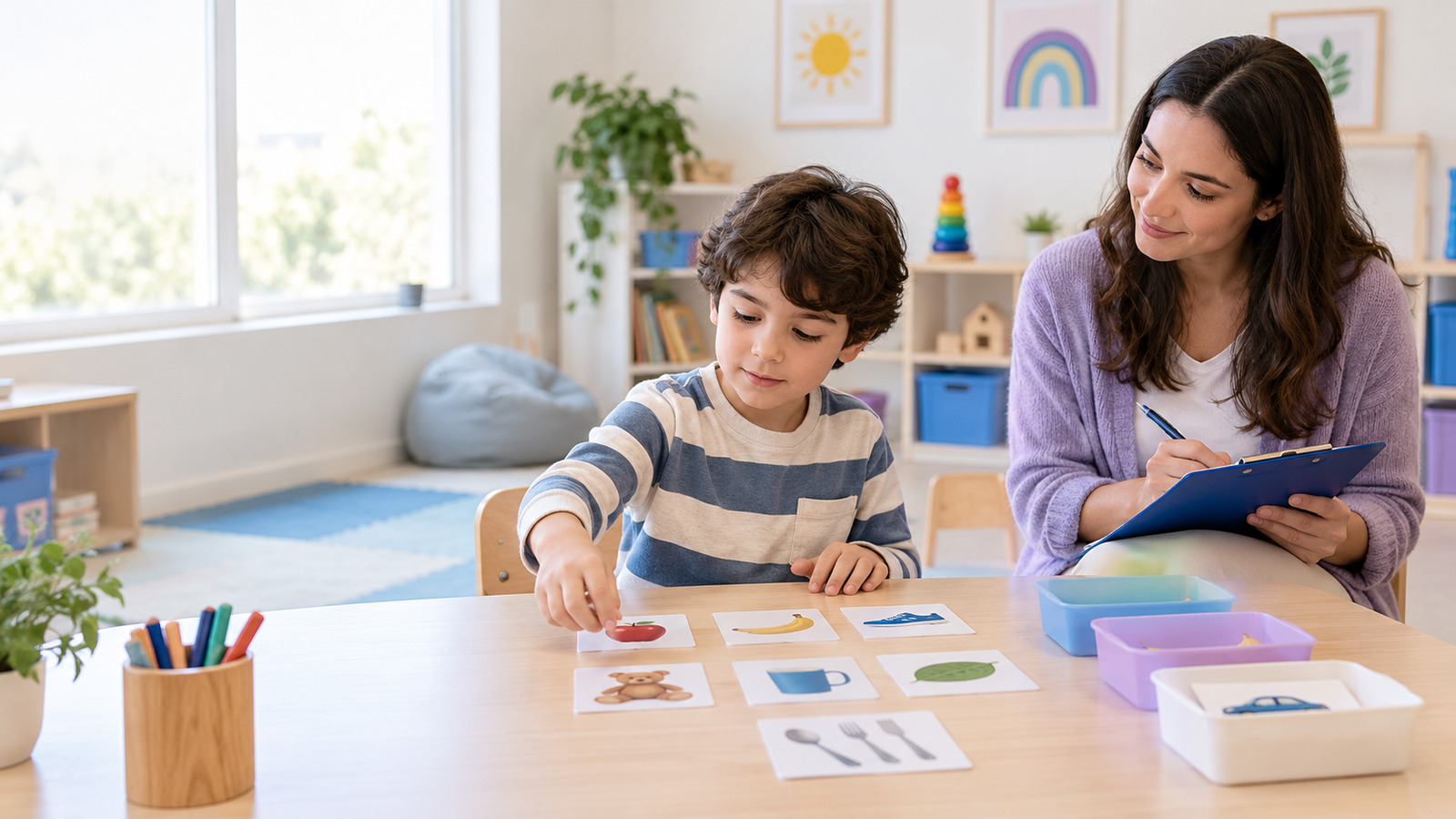
Progress in autism education is monitored through regular record-keeping based on skills identified at the beginning of the program and measurable goals. It is important to understand what the child can do, in which setting, and with how much assistance. Considering family observations alongside data from the educational setting makes it easier to update the program according to the child's needs.
First, determine the child's baseline level
Before working on a goal, it is important to record the child's current ability. For example, to support requesting help, you can observe how the child currently expresses the need for assistance and in which situations they require support.
Baseline information helps make sense of changes observed later. Recording conditions such as the child's tiredness, background noise, or the materials being used can also support the assessment. Collecting observations on different days reduces the risk of making decisions based on a single observation.
Write goals in observable terms
Instead of using a general statement such as "improve communication," define which communication behavior should be supported and in what situation. For example, when having difficulty with an activity, a child may request help using an appropriate word, gesture, or communication tool. The criteria should be determined according to the individual child.
In your records, include not only the number of correct responses but also the level of assistance provided. A behavior performed with adult guidance is not the same as one initiated independently by the child. The educational team should explain this difference to the family in a clear and understandable way.
Monitor how skills transfer to everyday life
It is also important to examine whether a skill demonstrated in the educational setting is used at home, at school, or with another person. Seeing a learned skill appear in different situations helps you understand its contribution to the child's everyday life.
During regular meetings, ask which goals are showing progress, where difficulties remain, and what the next step will be. If progress is limited, the suitability of the goal, teaching approach, and environmental support should be evaluated. Rather than comparing the child with other children, compare their progress with their own baseline level.