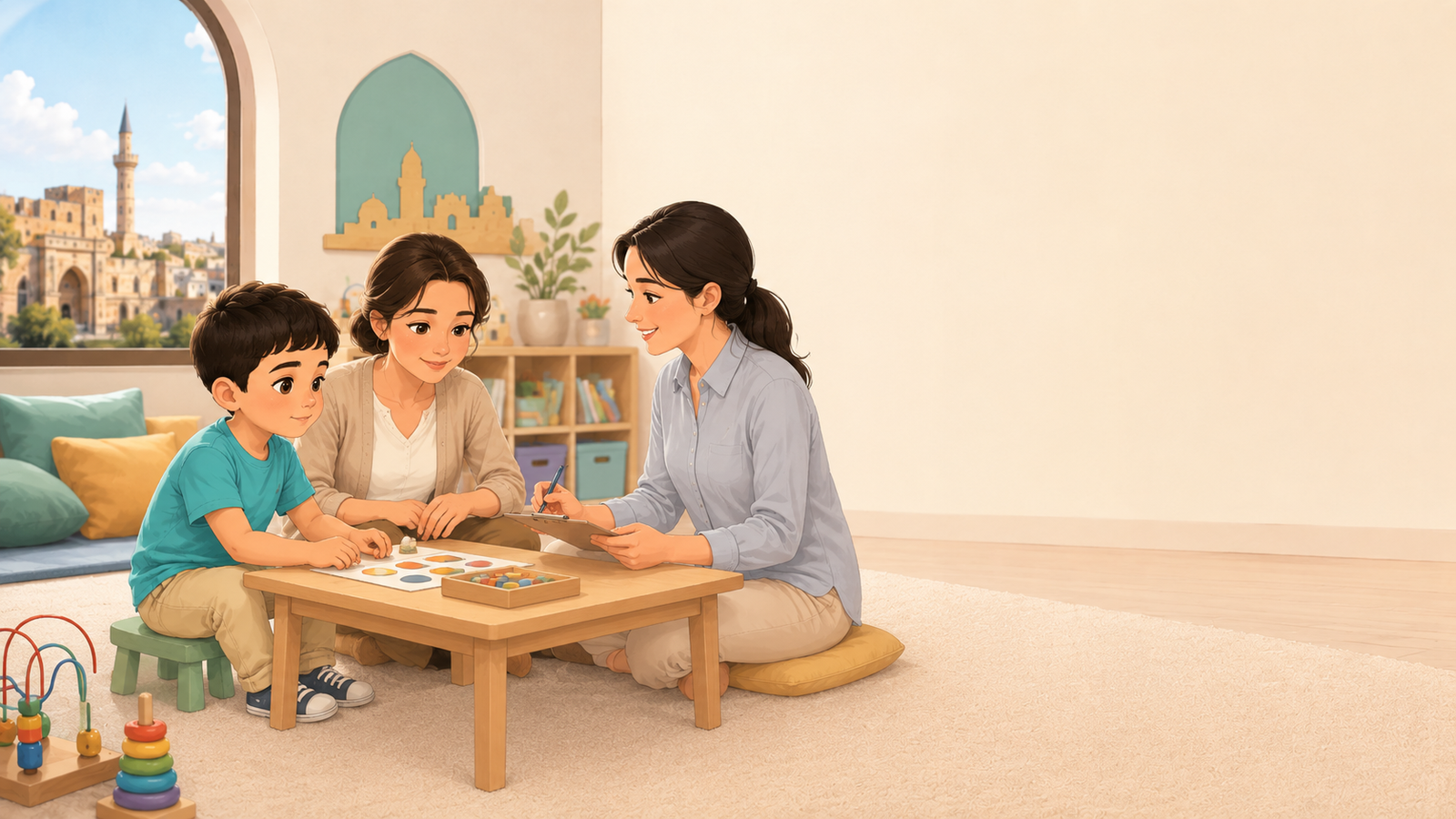
Family involvement in ABA education means much more than simply bringing a child to and from therapy sessions. Since home is the environment where children spend the most time during the day, family involvement plays an important role in helping children transfer the skills they learn during education into everyday life. It is not enough for a child to ask for help, put away toys, or wait at the education center; the goal should be for the child to use these skills at home, at school, and in social environments as well.
Through family education, parents can learn to observe the reasons behind behaviors more accurately, provide appropriate instructions, give the child enough time, and consistently support positive behaviors. Activities practiced at home should not be planned as long and tiring sessions, but rather integrated into the natural flow of daily life. Routines such as getting dressed, eating, playing, and shopping can become opportunities for learning.
However, it is not appropriate to place the entire responsibility for education on the family. An effective process requires regular communication between the specialist, family, and school, measurable goals, and regular updates to the education program based on the child’s development. When the family’s observations are considered together with professional assessments, a more functional and sustainable educational process can be achieved.