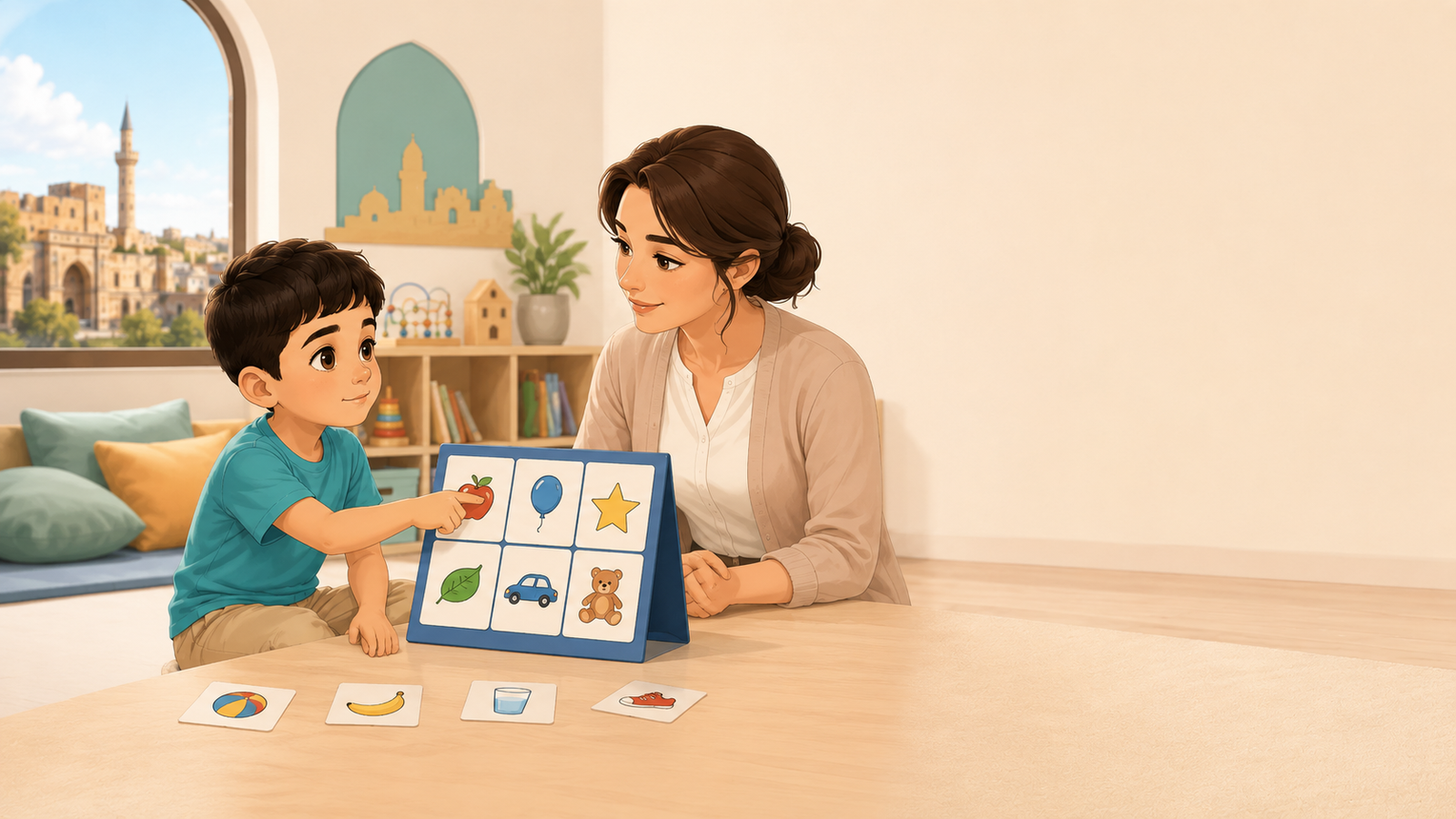
It is incorrect to assume that an autistic child who does not speak is not communicating. The child may try to express their needs by reaching for an object they want, guiding an adult's hand, showing a visual image, making sounds, or through their behavior. Carefully observing these cues, noticing communication attempts, and giving the child sufficient time to respond are important for the development of communication.
In communication studies, short and clear expressions, visual aids, opportunities for choice, and activities the child enjoys can be used. The goal is not to force the child to make eye contact or say words, but to develop a communication method that allows them to express themselves in a more understandable and functional way. Noticing and appropriately responding to every meaningful communication attempt the child makes can increase motivation.
In ABA-based individual education, the child's existing communication skills are assessed, and appropriate methods from verbal communication, visual communication, or alternative communication can be included in the education program. If families also use these methods consistently at home, it can make it easier for the child to transfer the communication skills they have learned to daily life.