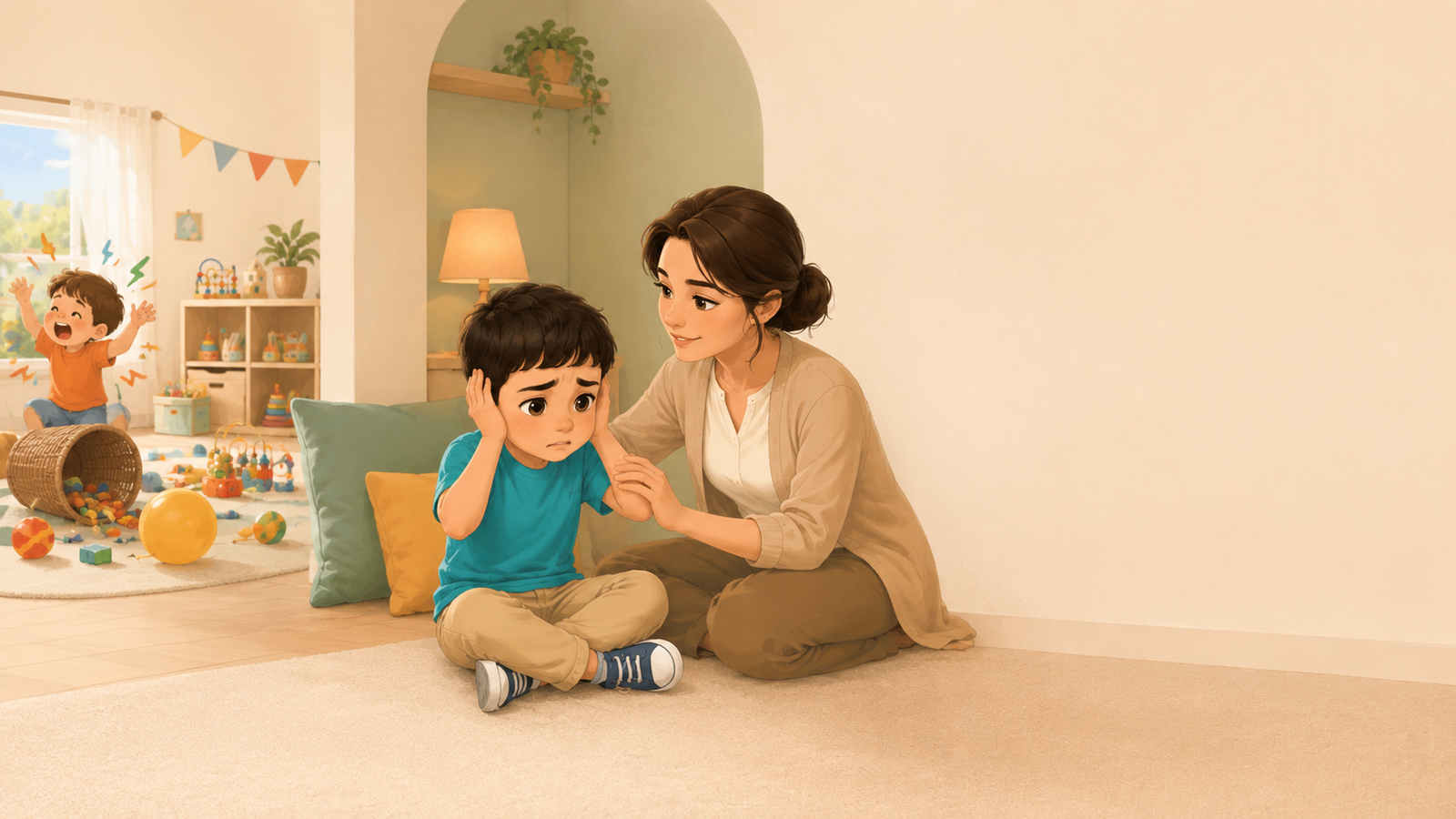
Intense crying, screaming, lying on the floor, or trying to leave an environment in children with autism is not always a tantrum intended to get what they want. Crowded places, loud noises, bright lights, unexpected changes, or uncomfortable textures can create more sensory input than the child is able to process. In these situations, the child is often trying to reduce overwhelming sensory stress and protect themselves rather than control the people around them.
During these behaviors, giving long explanations, shouting, or using punishment usually does not solve the problem. The first priority should be to create a safe and calm environment, reduce sensory triggers, and evaluate what happened before the behavior once the child has calmed down. Keeping a record of when, where, and under what circumstances the behavior occurs can help identify recurring triggers and patterns.
ABA-based behavior analysis and sensory integration assessment can help identify the function of the behavior and teach more functional skills, such as asking for a break, requesting help, or preparing for changes in routine. The goal is not simply to stop the behavior, but to understand the reason behind the child’s distress and teach an appropriate communication skill they can use instead.